
DeclutterMind
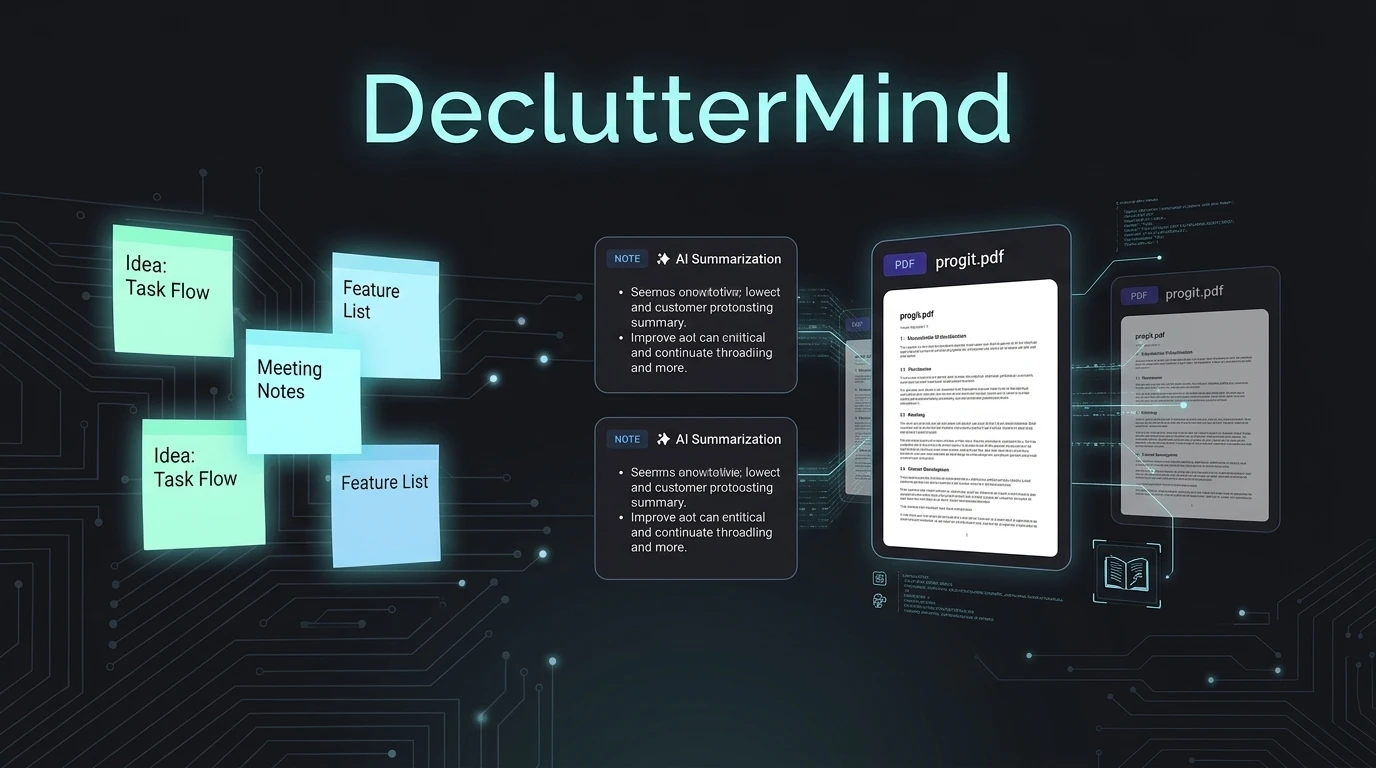
Your mind, decluttered. Your Study workspace, supercharged. DeclutterMind transform your fragemented thoughts into a seamless infinite workspace
Demo video
What it does
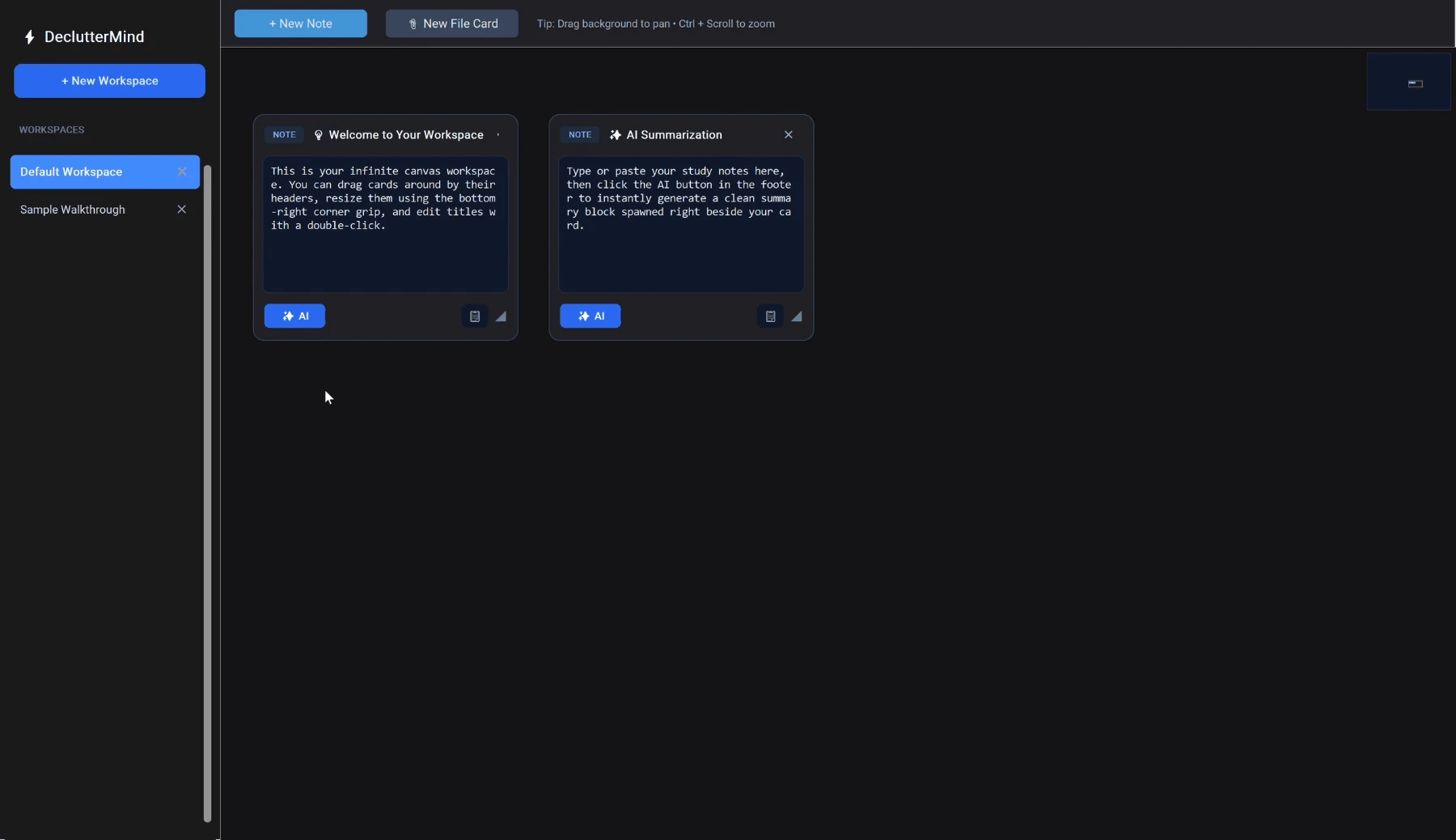
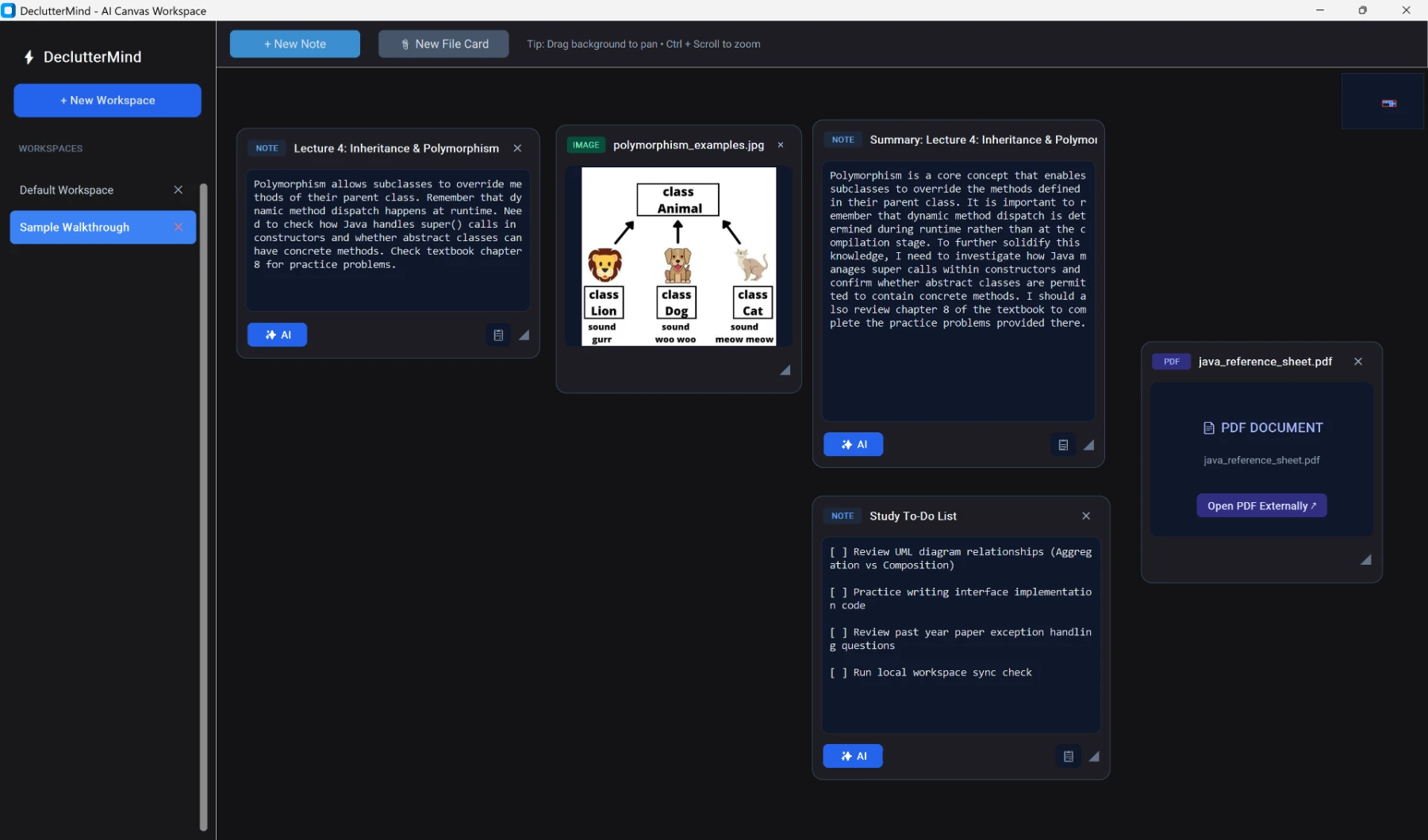
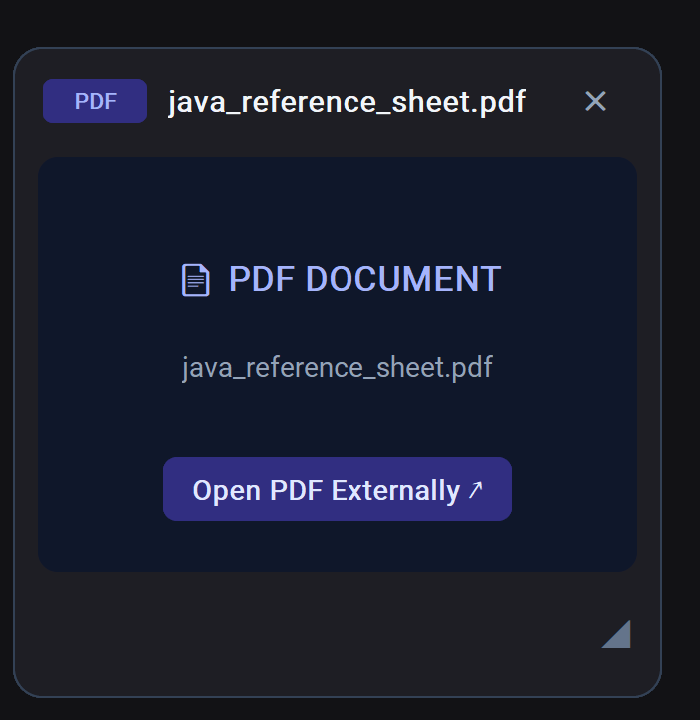
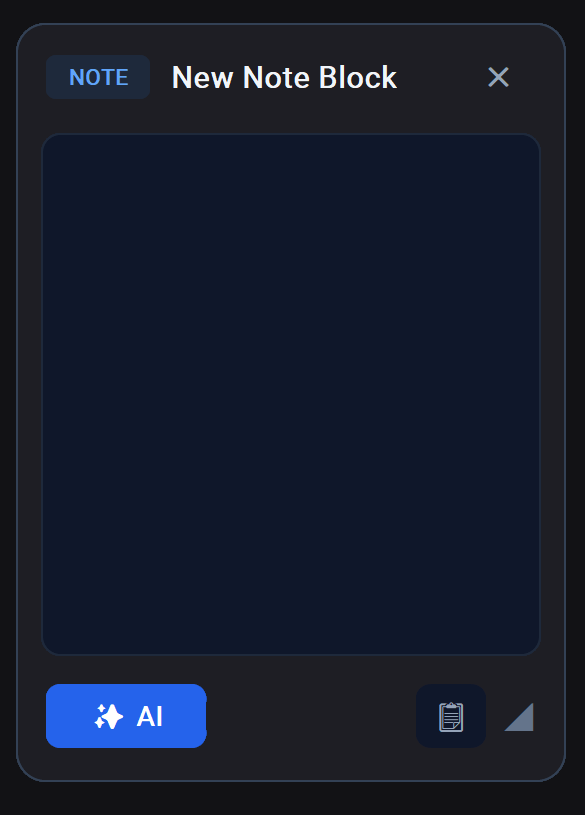
DeclutterMind is a modular desktop productivity suite built with Python and CustomTkinter that transforms fragmented thoughts, study notes , and reference files into a seamless infinite canvas workspace. It allows students and developers to visually pan and zoom across ideas, pin interactive sticky notes and PDF/image previews, and leverage integrated AI (powered by Google Gemini) for instantaneous summarisation with local JSON data persistence. The goal is to have a workspace that isn't just another note-taking application but seemlessly acts as a secondbrain too for students.
Inspiration
As computer science student juggling dense reading lists, reference PDFs, and messy study materials, we noticed that traditional productivity tools force everything into rigid linear document structures. It is also harder to visualise and sort your thoughts out. Taking inspiration from different note-taking application and sticky notes concept, we come up with a hybrid solution where all your messy thoughts and references can be in the same canvas, eliminating the needs of having multiple unorganised tabs open. We wanted to build a workspace that matches how our brains actually process complex information - spatial, flexible, and media-rich. Dropping in a textbook chapter or lecture notes should immediately give you clean, AI-generated insights right beside your working canvas without ever locking up your UI.
How we built it
DeclutterMind was built using python and custom-tkinter. To challenge myself, I decide to commit to a 100% Python stack for the entire project. Conducting deep research to select the optimal packages and library for the specific usecase. Frontend & UI Architecture: Engineered a high-performance desktop UI using CustomTkinter & Tkinter, featuring custom container bounding, fixed-docked footers with dynamic Level-of-Detail (LOD) zoom scaling, and a live minimap HUD. AI Pipeline: Integrated the Google GenAI SDK (gemini-3.1-flash-lite) for rapid text analysis and note generation, running requests via asynchronous background threading to ensure the desktop interface remains buttery-smooth and non-blocking. Storage & Persistence: Built a robust local-first flat-file state engine that serializes entire canvas layouts, card coordinates, zoom levels, and user notes straight into declutter_workspaces.json.
Challenges we ran into
I overcame some technical bottlenecks during development by collaborating directly with Gemini chat to debug complex issues and refine architecture. Some major challenges that I run into: Infinite Canvas & Widget Layout Bounding: Managing Tkinter widget packing hierarchies inside interactive canvas windows led to nested components (like resize grips and footers) occasionally getting overlapped during multi-scaling zoom interactions. We solved this by implementing strict packing orders, fixed-height header/footer containers, and dynamic visibility triggers that collapse heavy media previews when cards shrink. UI Responsiveness During AI Calls: Keeping the desktop app responsive while waiting for Gemini API responses required carefully structuring asynchronous background threads to avoid freezing the main Tkinter event loop.
What's next
I planned to expand DeclutterMind so that it can supporting and handle more unique features. I want to improve it so that it feels more intuitive to use similar to a note-taking application. Some features would be: Local-First LLM Support: Integrating Ollama to support lightweight models (like Gemma) completely offline for air-gapped, privacy-focused workflows. Enhanced Export Service: Adding support for exporting entire canvas boards to Markdown, PDF, or JSON for smooth synchronization with Obsidian and Notion.
Screenshots
0 comments
Sign in to upvote this project or leave the team a comment.