
PocketPath
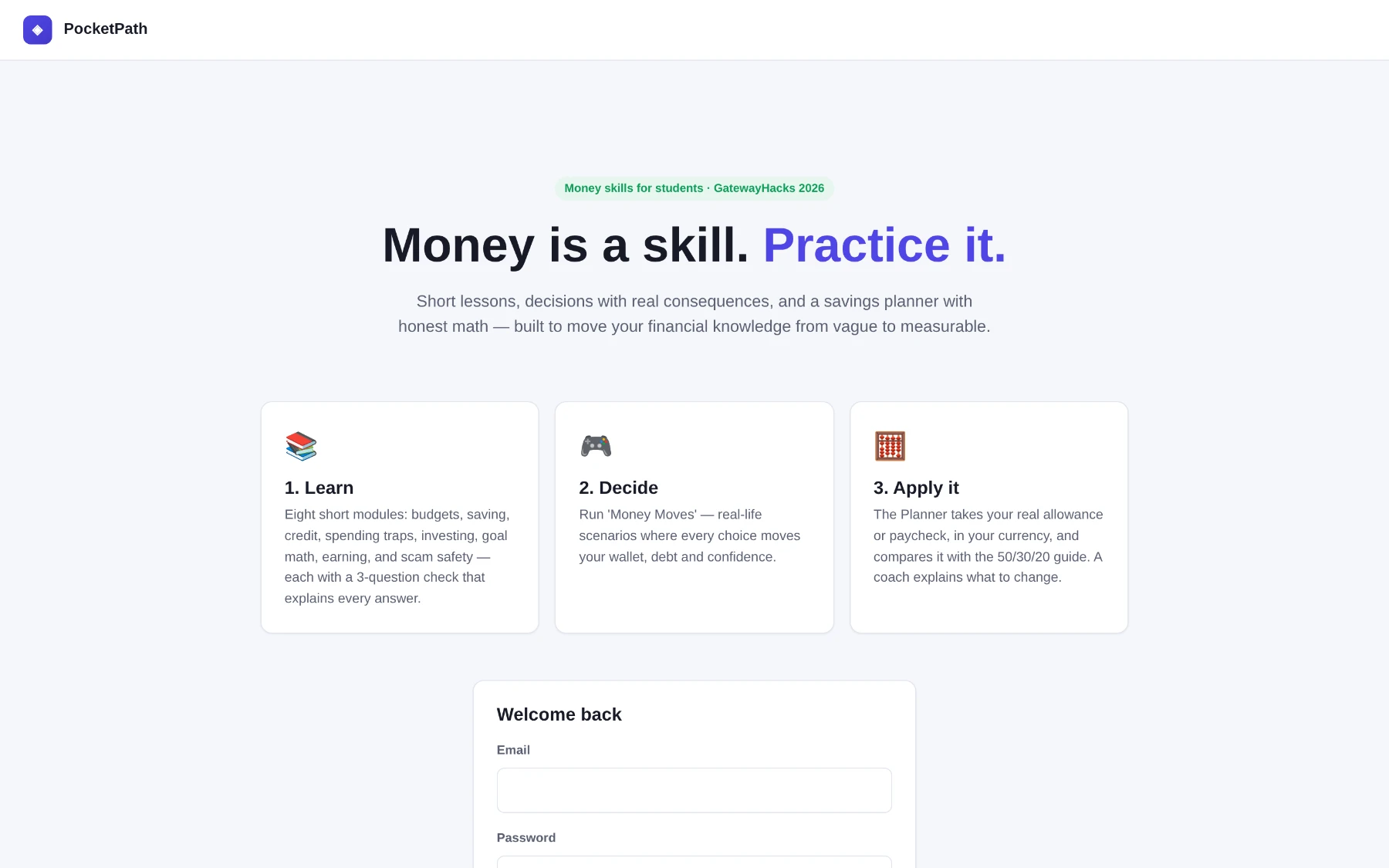
Learn → decide → apply. Money skills for students, in their own currency, with the learning gain measured.
Demo video
What it does
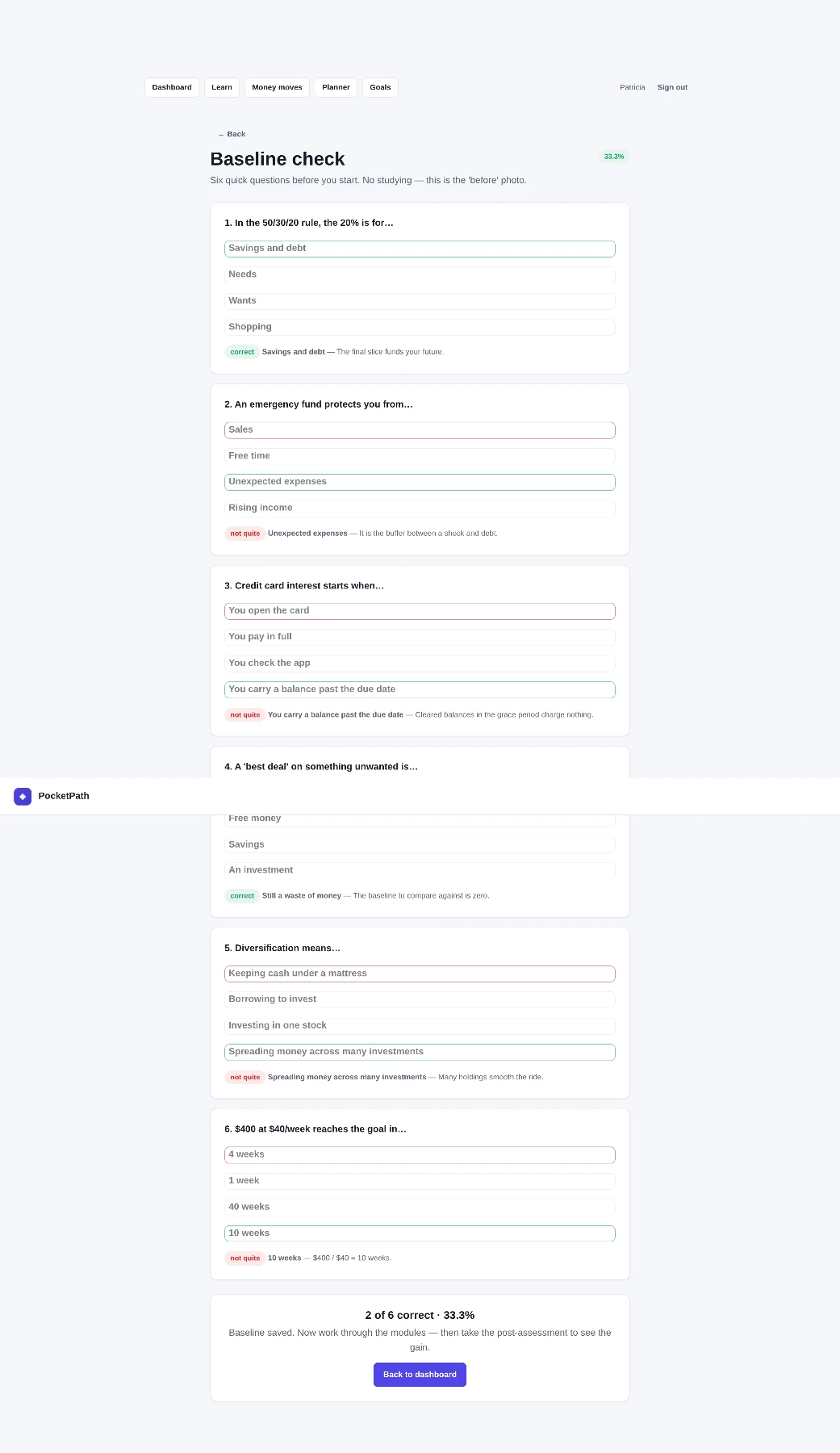
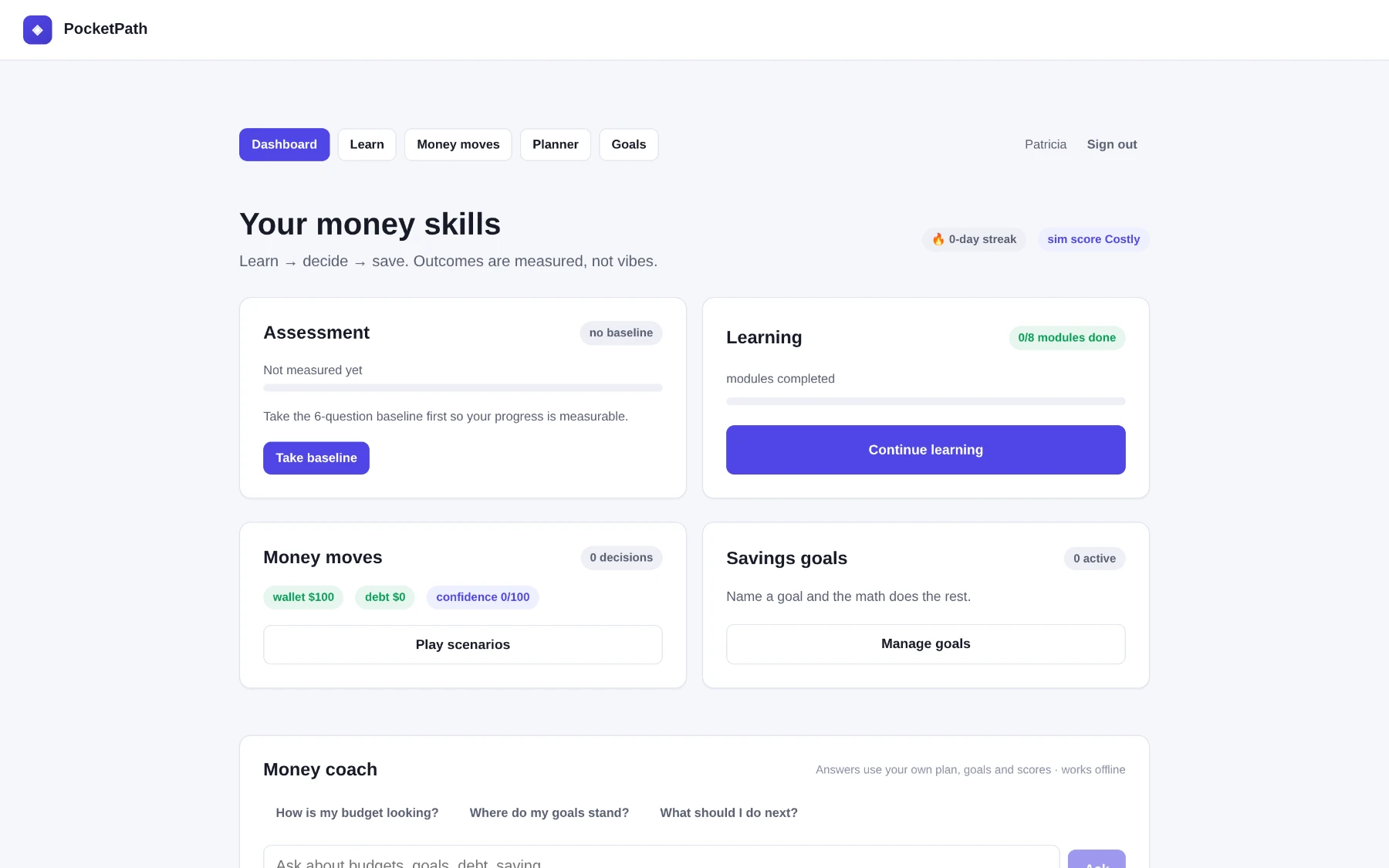
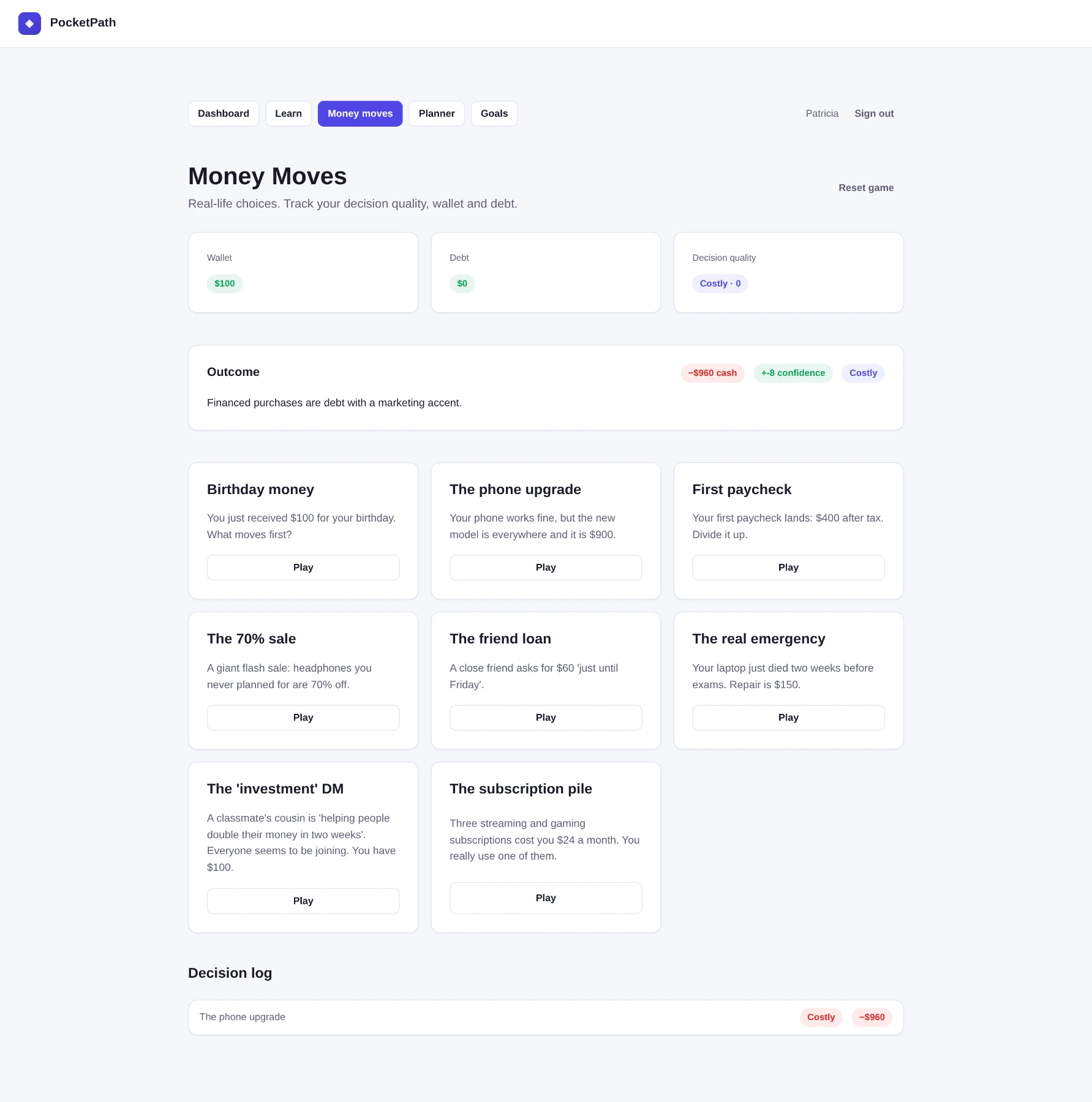
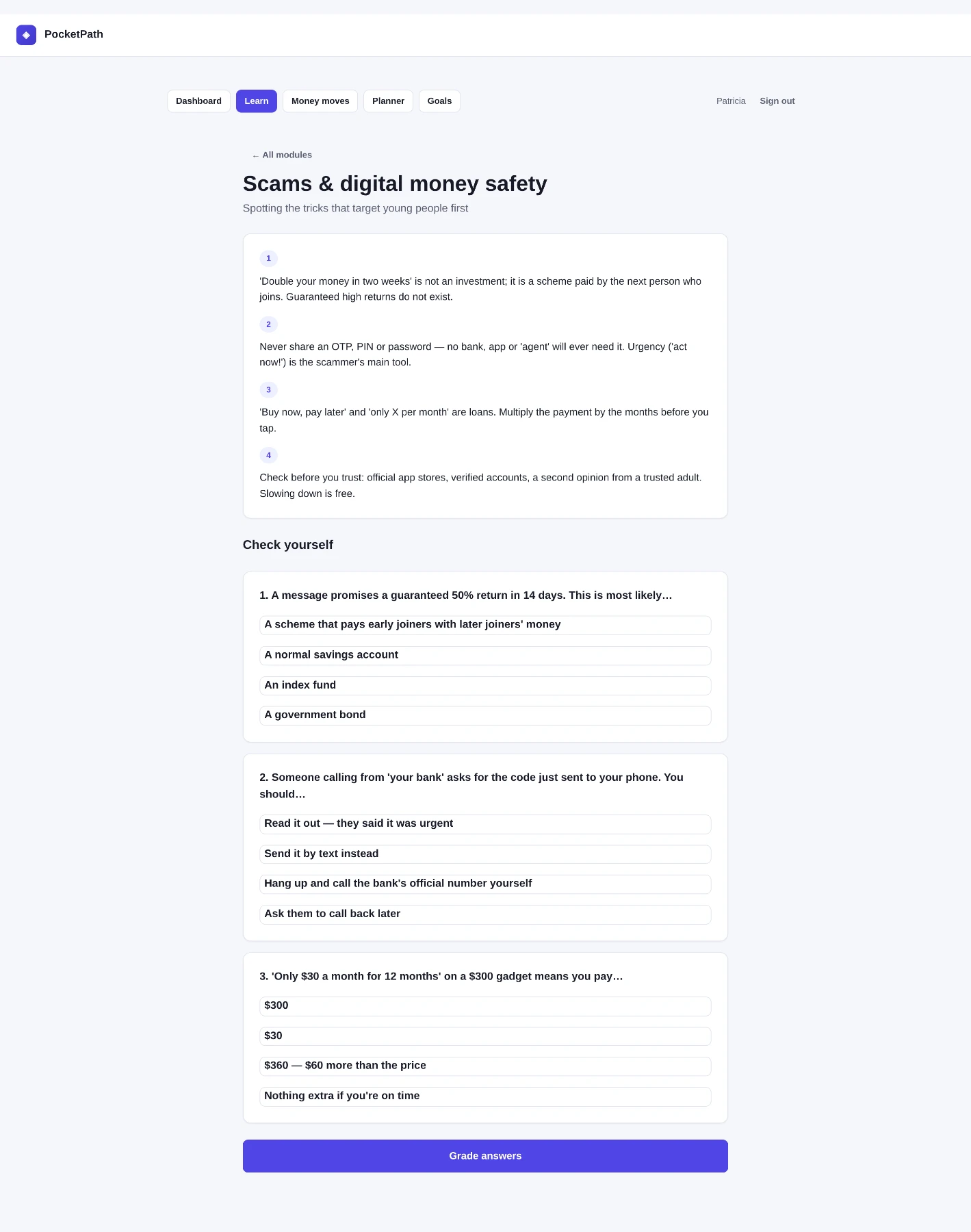
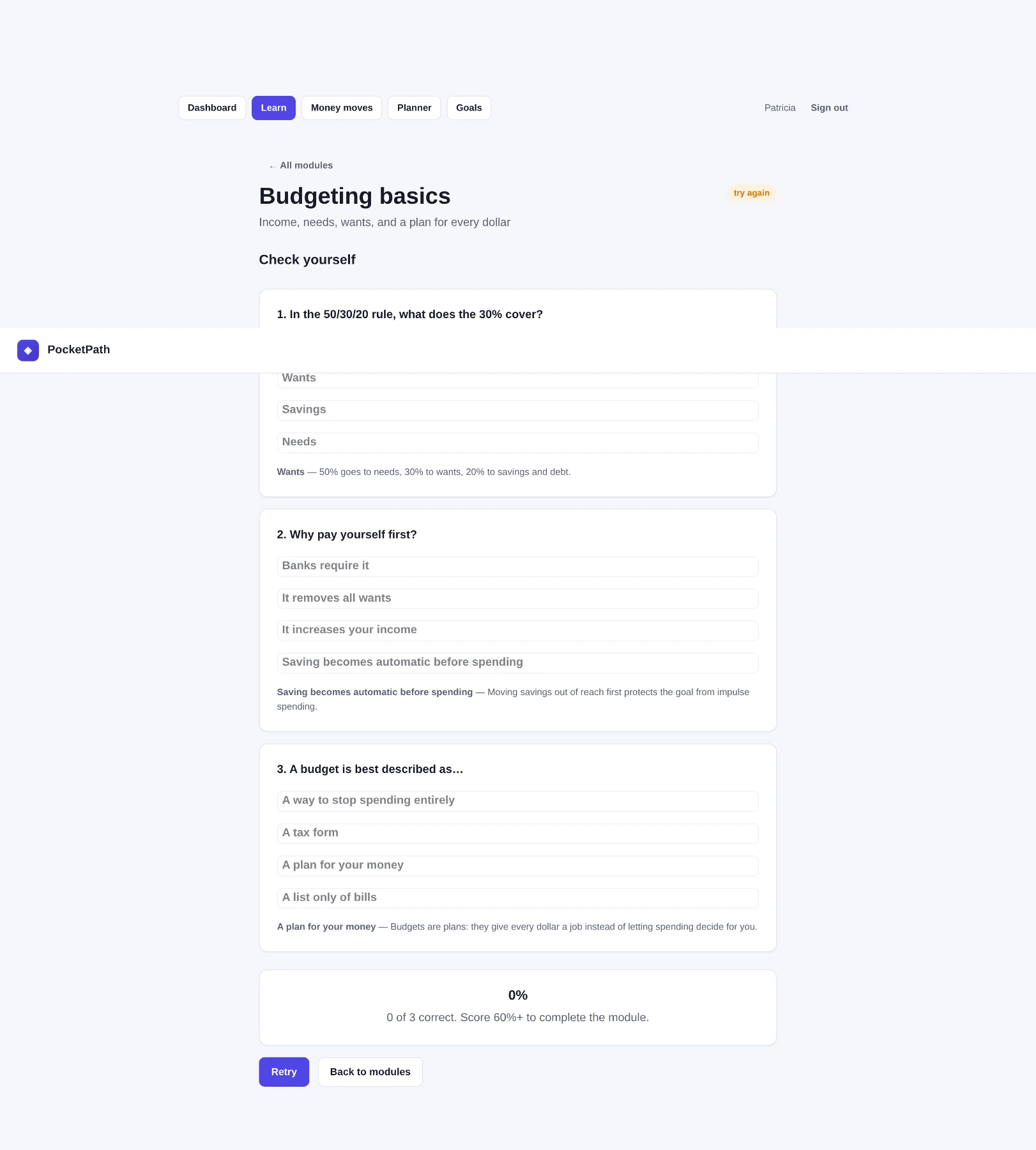
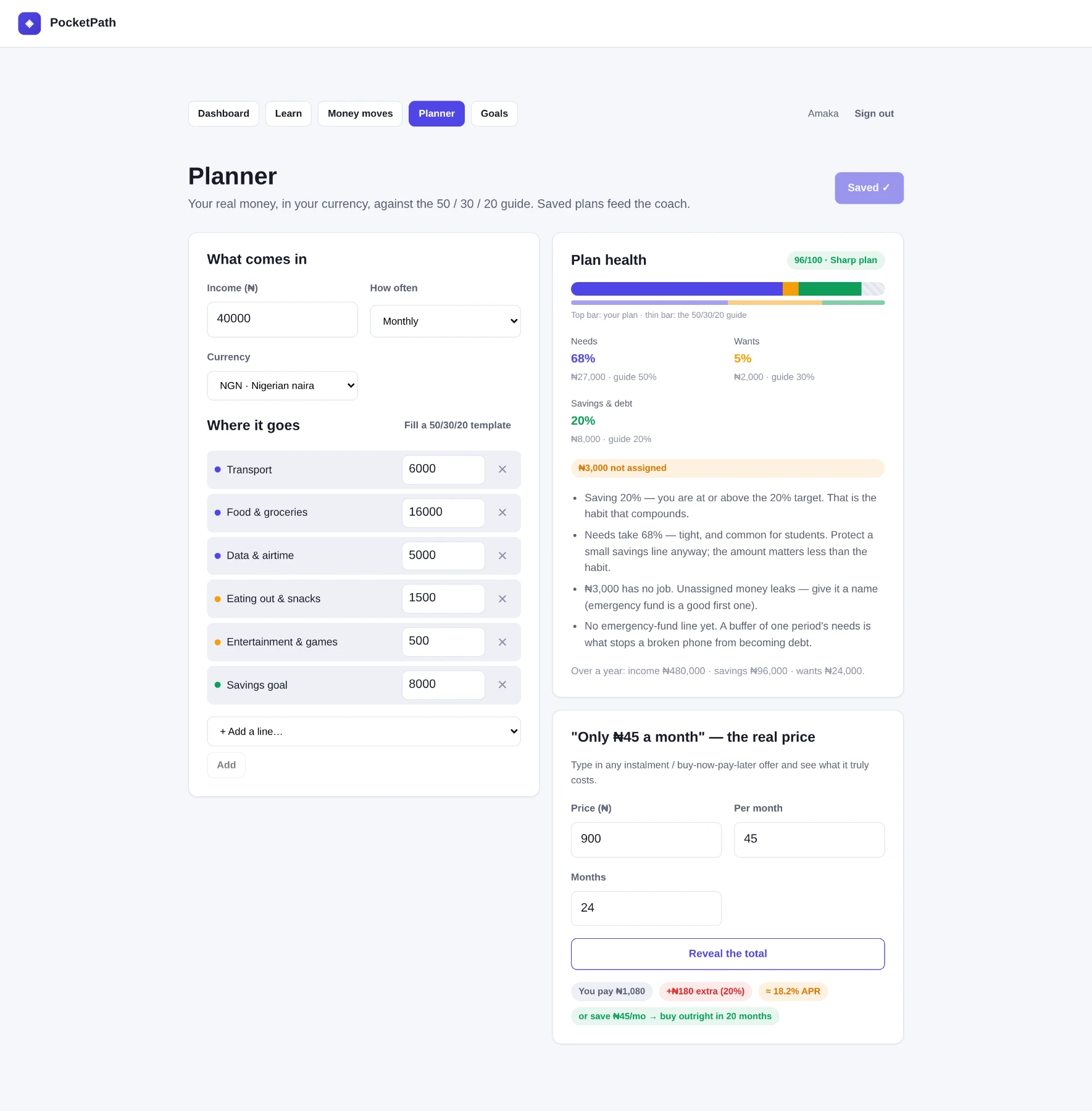
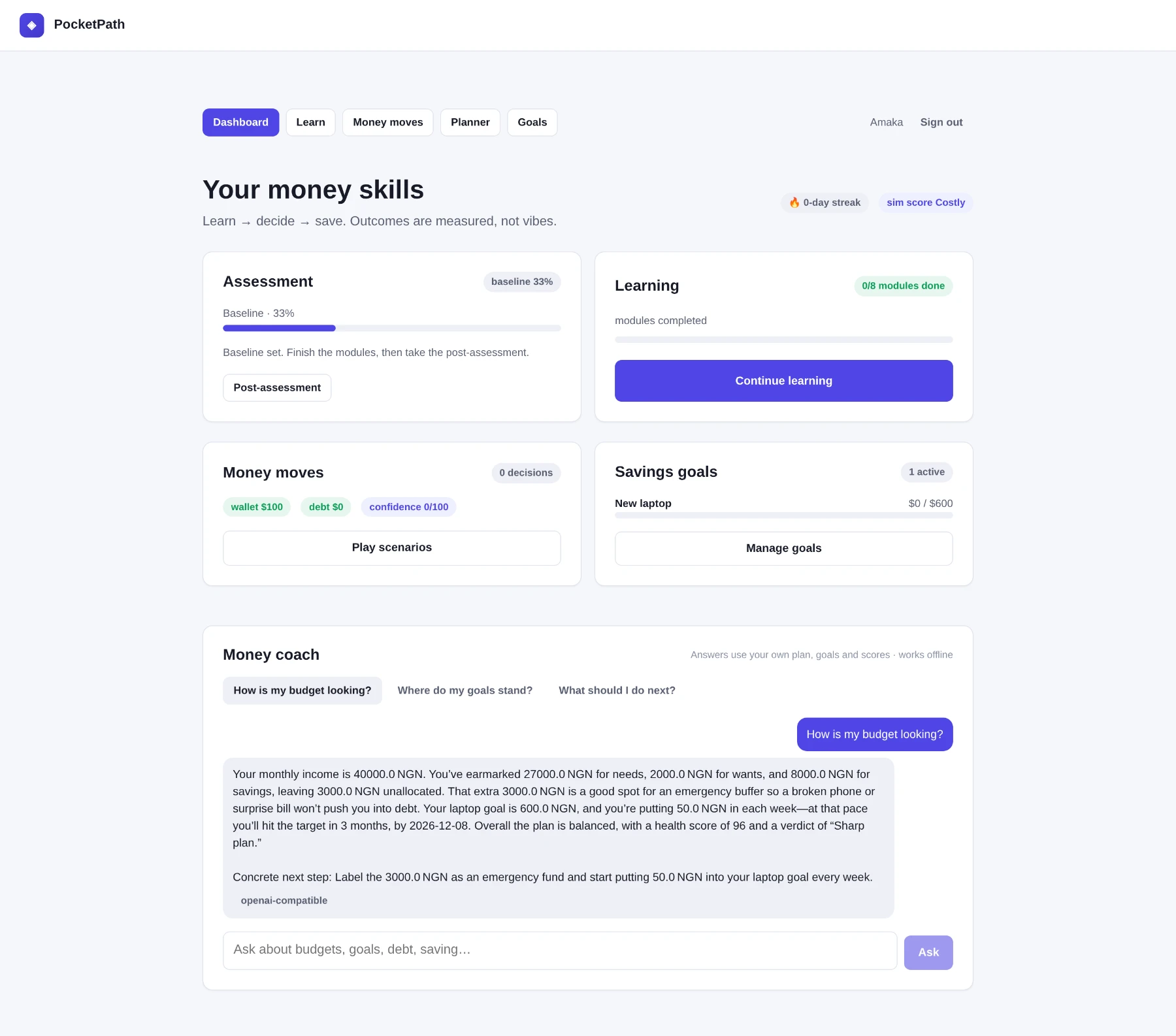
PocketPath is a financial-learning and decision-making tool designed to help students build practical money skills. It combines short lessons, assessments, realistic financial decisions, and personalized planning so users can learn financial concepts and immediately apply them. PocketPath includes a 6-question baseline and post-assessment to measure learning gain, 8 learning modules covering budgeting, saving, credit, spending traps, investing, goal math, earning, and scam safety, realistic Money Moves scenarios, wallet/debt/confidence tracking, a decision-quality score, and a financial planner supporting 15 currencies. It also includes the 50/30/20 budgeting guide, installment and total-cost calculations, implied-APR calculations, savings goals, and a personalized money coach. The goal is not just to teach financial concepts, but to measure whether students actually learned and can apply them.
Inspiration
Financial literacy is an important life skill, but many students do not get enough practical financial education in school. We wanted to create something that feels less like a textbook and more like a place where students can actually practice making financial decisions. Many existing free resources are heavily reading-based or focused around financial systems that may not match the student's environment. We wanted PocketPath to be more practical, localized, and measurable. That led us to combine financial education with decision-making scenarios, localized currency support, planning tools, and measurable learning gains.
How we built it
PocketPath was built as a modern web application using React, TypeScript, Vite, Python, FastAPI, Pydantic, SQLAlchemy, and SQLite. We used Docker and GitHub Actions for development and deployment. The learning system starts with a baseline assessment, provides financial lessons and interactive scenarios, and then uses a post-assessment to measure learning gain. The financial-planning tools calculate savings targets, weekly contributions, installment costs, total costs, and implied APRs. The AI coach can use the student's goals, scores, and financial plan to provide personalized guidance. We also built a deterministic offline coach as a fallback when an LLM is unavailable. The application was designed to remain lightweight and usable on lower-end devices and school laptops.
Challenges we ran into
One of our biggest challenges was making financial education practical rather than simply presenting information. We needed to design realistic scenarios where users could make decisions and receive meaningful feedback. Localization was another challenge. Financial advice can vary depending on currency and context, so PocketPath was designed to support multiple currencies rather than assuming everyone uses dollars. We also had to balance AI functionality with reliability. Since an AI service may not always be available, we built a deterministic offline coach as a fallback. Measuring learning was another challenge. Instead of simply tracking completed lessons, we added baseline and post-assessments so we could compare the user's results. There are still limitations: the current curriculum is a starting point rather than a complete financial course, the assessments mainly measure short-term learning and simulated decisions, and there is not yet a teacher dashboard.
What's next
Our next step is to expand PocketPath from a personal learning tool into a platform that can support schools and larger student communities. We would like to add a teacher dashboard, more financial-learning modules, more localized financial scenarios, additional currencies and regional financial contexts, longer-term learning and behaviour tracking, improved personalization, stronger offline capabilities, and better analytics for measuring financial-learning outcomes. We also hope to work with schools and financial-education organizations to make practical financial education more accessible to students. The long-term goal is to make financial education something students can actively practice, measure, and apply in everyday life.
Screenshots

0 comments
Sign in to upvote this project or leave the team a comment.